Reflections on Spring Gardening
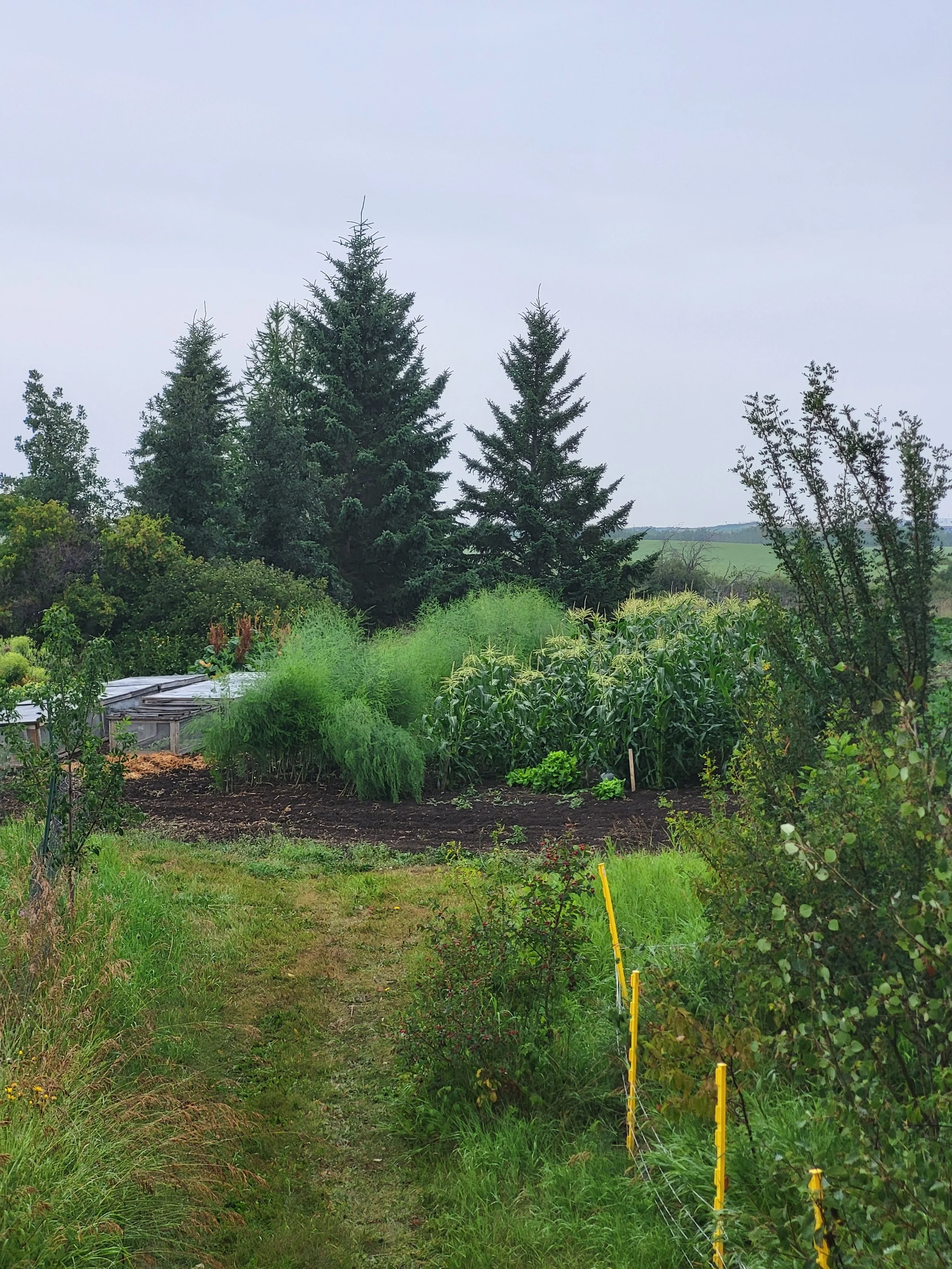
Part of my north vegetable garden last summer
Spring on the prairies comes as a surprise
One minute there’s snow on the ground, the next there’s sun in your eyes.
Connie Kaldor, “Spring on the Prairies”
Seeding will be late this spring. Until a week ago, the daytime high dipped below zero and my garden was covered with snow. Now the soil is delightfully moist, but still too wet to till. I am thankful for the row of lettuce, spinach, and garlic that I seeded/planted last fall. Along with self-seeded garden volunteers, it will provide fresh greens several weeks before the spring-seeded crop is ready.
My earliest vegetable, however, is asparagus. Which we usually start picking around Mother’s Day. Once it’s in full production, Doug and I eat it every day until the end of the season in late June. (See my cooking suggestions below.) Its retail price makes it a luxury for most people; we are blessed to have enough space to grow our own.
Like my ancestors—and the rest of my family—I garden. Grampa Ternier grew vegetables for sale. My mother tended a large garden and sold surplus produce. My brother and his daughter grow garden seeds (prairiegardenseeds.ca)—their online catalogue features an outstanding selection of open-pollinated tomato cultivars. My sister, along with her husband, son, and daughter-in-law, operate a community shared agriculture farm and sell year-around shares (largofarm.wordpress.com)—you can buy both vegetables and their own farm-raised meat. And Doug and I still maintain several large gardens, which have lured us back to our farm for the summer.
Our cohousing community in Saskatoon raises fruit and vegetables—not on a farm scale, but enough to supply its residents with fresh produce during the growing season. Community gardens and allotments throughout the city provide others with the means to do the same. And there have always been backyard gardeners who raise food for themselves and their families. If rising prices and the instability of the food chain aren’t sufficient reasons, consider another benefit of “growing your own”—freshly picked produce that tastes a whole lot better than what you can buy at the supermarket.
#
No response yet from any of the publishers to whom I sent my second novel. In the meantime, I continue to work on novel number three. The planning stage is almost complete, and I’m well into writing the first draft. If all goes well, I’ll finish it by the end of the summer.
#
Like my protagonist Jeannie Wolfert-Lang, I like to cook. Here are four ways I prepare asparagus:
Boiled: If spears are short enough (or you have a tall pot) stand asparagus upright in a pot with several inches of water. Bring to a boil, then simmer until asparagus is just tender. Drain well and dot with butter. Season with salt, pepper, and finely chopped fresh herbs if desired.
Roasted: In a shallow baking dish toss asparagus in olive oil to coat lightly, season with salt and pepper as desired, and roast in a 425F oven until barely tender. You may want to stir the asparagus after ten minutes.
Sautéd: Slice the asparagus stocks diagonally into three or four pieces. Sauté in oil until nearly tender. Add lemon juice and other seasonings as desired.
Grilled: Roll stalks in olive oil, season with salt and pepper, and grill until tender, turning every three or four minutes.
Asparagus is good with either butter or olive oil. It is delicious garnished with minced chives, parsley, and dill. Lightly cooked asparagus tossed in a vinaigrette and sprinkled with fresh herbs and hard-cooked egg or crumbled feta cheese makes a fine salad served either cold or at room temperature.
Betty Ternier Daniels